Every few months, a new app shows up in Pakistani WhatsApp groups promising something like “Rs. 3,000 daily, no investment, instant JazzCash withdrawal.” It has a slick icon, a few thousand downloads, and a bunch of five-star reviews posted within the same 48 hours. Six weeks later, the same app has disappeared from the Play Store, the “support” number doesn’t pick up, and a fresh batch of screenshots is circulating showing people who never got paid.
This isn’t a rare occurrence. It’s a pattern, and it repeats itself often enough that we felt it was worth writing down plainly, separate from any single app review, so you have somewhere to point a friend or family member who’s about to install one of these.
Why This Keeps Happening
Fake earning apps aren’t badly made — that’s part of the problem. Building a convincing-looking app with a wallet balance, a referral system, and a withdrawal button doesn’t take much anymore. What it does take is trust, and Pakistan’s digital payment rails (JazzCash, Easypaisa) actually make that easier for scammers, not harder. A “verified” green checkmark, a familiar wallet logo, and a screenshot of someone’s balance are enough to override a lot of skepticism, especially for someone earning their first income online.
The economics also don’t lie, even when the app does. A legitimate task-based or survey app might realistically pay a new user somewhere in the Rs. 50–300 per day range, depending on effort. If an app is promising several thousand rupees a day for tapping ads or spinning a wheel, ask yourself where that money is actually supposed to come from. Nobody is paying you triple the local minimum wage to watch a 15-second video.
The Warning Signs Worth Actually Remembering
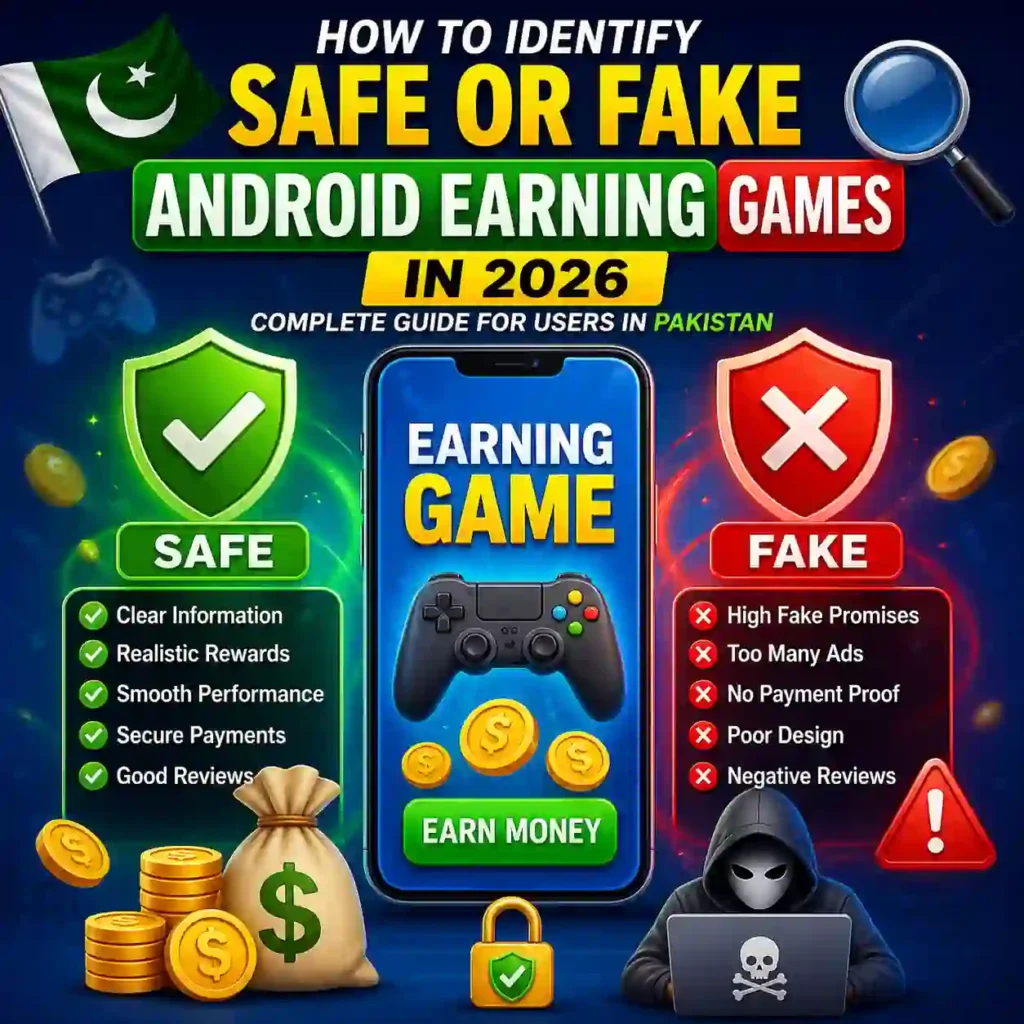
You don’t need to memorize a long checklist. Most fake earning apps trip at least two or three of the following:
1. You have to pay before you can earn. This is the single clearest signal. A “registration fee,” a “verification deposit,” an “unlock premium tasks” charge — legitimate platforms pay you, they don’t charge you to start.
2. The daily income promise doesn’t survive basic math. If the numbers being advertised would make the app’s operators lose money on every single user, the app isn’t planning to pay you. It’s planning to collect your data, your referral network, or a one-time fee, then quietly wind down.
3. Withdrawals always need “one more step.” A pattern reported constantly by Pakistani users: your in-app balance grows nicely, then the moment you try to withdraw, you’re told to invite five more friends, pay a “processing fee,” or wait for “account verification” that never completes. That balance was never real money — it was a number on a screen designed to keep you engaged.
4. There’s no company behind the app. Search the developer’s name. A real business has a website, a support email that actually replies, maybe a LinkedIn page, sometimes an office address. If the only trace of the developer is the app store listing itself, that’s your answer.
5. The reviews look manufactured. Genuine reviews are messy — some four stars, some one star, specific complaints about slow payouts or app crashes. A wall of identical five-star reviews posted within a day or two of launch is a manufactured wall, not real feedback.
6. It leans on referrals more than it leans on paying you. If inviting new users pays dramatically better than actually using the app, the business model is recruitment, not the service it claims to offer. That’s a structure that eventually runs out of new people to recruit — and stops paying everyone still waiting.
7. It asks for more access than it needs. An earning app has no reason to request your contacts, SMS history, or call logs. When it does, that data is often the actual product being monetized — sold on or used for further scam targeting — regardless of what the app claims to pay out.
8. “Verified” badges you can’t actually trace. Some apps display their own custom “Verified,” “Secure,” or “Trusted” badge inside the app itself. Unlike a real security certification, there’s nothing to click through to confirm it. If a badge doesn’t link to an independent, checkable source, treat it as decoration, not proof.
9. Urgency is doing the selling. “Only 200 spots left today,” countdown timers, “bonus expires in 1 hour” — pressure tactics exist to stop you from pausing to think, search, or ask someone else’s opinion. A legitimate opportunity is still there tomorrow.
What to Do If You’ve Already Installed One
If an app you’ve installed matches two or more of the signs above, don’t wait for confirmation before acting:
- Stop entering any more personal or financial information into the app immediately.
- Uninstall it completely — not just remove the icon. Then check Google Account → Security → “Third-party apps with account access” and revoke anything unfamiliar.
- Check your JazzCash/Easypaisa transaction history for anything you didn’t authorize, and change your wallet PIN if you shared it or entered it inside the app itself.
- Screenshot everything — the app listing, your balance, chat messages, any payment requests — before the app disappears from the store, since scam apps are often pulled quickly once complaints pile up.
- Report it. File a complaint through the FIA’s National Response Centre for Cyber Crime (NR3C) if money or data was actually taken, and flag the app as fraudulent on the Play Store so it gets reviewed for other users.
A Realistic Expectation Going Forward
None of this means every earning app is a scam — it means the category is worth extra scrutiny before you hand over a PIN, a fee, or your contacts list. A genuine app is usually boring in the best way: modest payouts, a real company behind it, reviews that read like actual humans wrote them, and a withdrawal process that doesn’t suddenly require “one more step.” If something promises to make that process exciting instead, that excitement is usually the point — it’s there to stop you from checking.
We keep a running, dated list of apps we’ve hands-on tested — installed, registered, and where possible, actually tried to withdraw from — rather than relying on what a developer claims. If you’re ever unsure about a specific app, that’s the place to check before you download it, not after.
Editorial note for consistency with your existing “How We Review” framework: this piece is written as a standalone awareness/education post (not a single-app review), so it doesn’t carry an App Classification or Editorial Rating block — consider tagging it something like scam-awareness or guide rather than a country tag, since it isn’t reviewing one specific app.